არ გაეკარო, არა. ოღონდ ჩვენ დაგვანებე თავი, კარგი?

ეარ ფრანსშიც არ ჩაჯდე. აგერ, შარშან წინ ჩამოუვარდათ რიო-პარიზი.
პს
სირცხვილი კი არ არის თქვა, რომ წარმოდგენა არ გაქვს რაღაც საკითხებზე. აქ ჰო, მაგრამ სხვაგან ნუ იტყვი, რომ თურქიში მსოფლიოს საშიშ და არასაიმედო ავიაკომპანიათა რიცხვშია.
დაგცინებენ, ზედიზედ რამდენი წელია, ევროპის საუკეთესო ავიაკომპანიების რიცხვში შედის კომფორტით, მომსახურებით, ფრენების სიხშირით და ტრანსფერების მოხერხებულობით. და რაც მთავარია, ყველაზე ახალგაზრდა ავიაპარკით მთელ ევროპაში.
ამ ავიაკომპანიას თავისი საფრენოსნო აკადემია და ტრენინგ ცენტრები აქვს სტამბულში, სადაც მსოფლიოს ბევრი ქვეყნის ეკიპაჟი გადის მომზადებას.
კატასტროფებს რაც შეეხება...
British Airways
1976
On 10 September 1976, a Trident 3B on British Airways Flight 476, flying from London Heathrow to Istanbul collided in mid-air with an Inex Adria DC9-31 near Zagreb, Croatia, resulting in the 1976 Zagreb mid-air collision.[148] All 54 passengers and 9 crew members on the BA aircraft died. This is the only fatal accident to a British Airways aircraft since the company's formation in
1974.
1982
On 24 June 1982, Flight 9, a Boeing 747–200, G-BDXH, City of Edinburgh flew through a cloud of volcanic ash and dust from the eruption of Mount Galunggung, causing extensive damage to the aircraft, including the failure of all four engines.[149] The crew managed to glide the plane out of the dust cloud and restart all four of its engines, although one later had to be shut down again. The aircraft made an emergency landing at Halim Perdanakusuma International Airport just outside Jakarta, Indonesia. No people killed or injured.[150]
On 10 June 1990, Flight 5390, a BAC One-Eleven flight between Birmingham and Málaga, suffered a windscreen blowout due to the fitting of incorrect bolts the previous day. The Captain suffered major injuries after being partially blown out of the aircraft, however the co-pilot landed the plane safely at Southampton Airport. The captain, Tim Lancaster, despite the physical trauma he suffered, fully recovered and five months later he returned to duty.[151]
On 2 August 1990, Flight 149 landed at Kuwait International Airport four hours after the Iraqi invasion of Kuwait, leading to the capture of the passengers and crew, and the destruction of the aircraft.[152][153]
2008
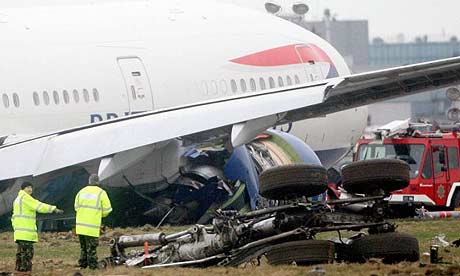
The damaged British Airways Flight 38
On 17 January 2008, British Airways Flight 38, a Boeing 777-200ER G-YMMM, flying from Beijing to London, crash-landed approximately 1,000 feet (300 m) short of London Heathrow Airport's runway 27L, and slid onto the runway's threshold. This resulted in damage to the landing gear, the wing roots, and the engines, resulting in the first hull loss of a Boeing 777. There were 136 passengers and 16 crew on board. No people were killed, and there were no post-crash explosions or fires, but one serious and twelve minor injuries were sustained. The initial report from the Air Accidents Investigation Branch stated that the engines repeatedly failed to respond to commands for more thrust from both the autothrottle system and from manual intervention, beginning when the aircraft was at an altitude of 600 feet (180 m) and 2 miles (3.2 km) from touchdown.[154] In September 2008, it was revealed that ice forming in the fuel might have caused the crash. In early 2009, Boeing sent an update to aircraft operators, identifying the problem as specific to the Rolls-Royce engine oil-fuel flow [heat exchanger] which has since been the subject of a fleet-wide modification programme to prevent recurrences of ice formation in the fuel flow.[155]
------------------------------
lufthansa


Fatal
On January 11, 1959, Lufthansa Flight 502, a Lufthansa Lockheed Super Constellation (registered D-ALAK) crashed onto a beach shortly off Galeão Airport in Rio de Janeiro following a scheduled passenger flight from Hamburg, Germany. Of the 29 passengers and 10 crew members on board, only three flight attendants survived. Investigation into the accident resulted in blaming the pilots for having executed a too low approach, which may have been caused by fatigue.[55]
On December 4, 1961, a Lufthansa Boeing 720 (registered D-ABOK) crashed of unknown causes near Mainz during a training flight from Frankfurt to Cologne, killing the three occupants. It was the first crash involving an aircraft of that type.[56]
On July 15, 1964, another Boeing 720 (registered D-ABOP) crashed during a training flight, with the three people on board losing their lives (in what was only the second crash for this aircraft type). The accident occurred near Ansbach after the pilots had lost control of the aircraft when executing an aileron roll.
On January 28, 1966 at 17:50 local time, Lufthansa Flight 5 from Frankfurt to Bremen, which was operated using a Convair CV-440 Metropolitan registered D-ACAT, crashed 0.5 kilometres short of Bremen Airport, killing all 42 passengers and 4 crew members on board. The pilots had tried to execute a go-around when approaching the airport, during which the aircraft stalled and went out of control, possibly due to pilot error.[57]
On November 20, 1974 at 07:54 local time, Lufthansa Flight 540, a Boeing 747–100 (registered D-ABYB), crashed shortly after take-off at Jomo Kenyatta International Airport in what was the first air accident involving a Boeing 747. 55 of the 140 passengers and 10 out of the 17 crew lost their lives, making it the worst accident in the history of the airline.[58]
On July 26, 1979 at 21:32 UTC, a cargo-configured Boeing 707 (registered D-ABUY) that was en route Lufthansa Flight 527 from Rio de Janeiro to Dakar and onwards to Germany (at that time cargo flights were operated in-house, the German Cargo subsidiary had not been founded yet) crashed into a mountain 25 kilometres off Galeão Airport during initial climb, killing the three crew members on board. A flawed communication between the pilots and the air traffic controller had resulted in the aircraft flying on a wrong path.[59]
On September 14, 1993, Lufthansa Flight 2904, an Airbus A320-200 (registered D-AIPN) flying from Frankfurt to Warsaw with 64 passengers and 4 crew members on board, overran the runway upon landing at Warsaw-Okecie Airport and crashed into an earth embankment, resulting in the death of the co-pilot and one passenger.[60][61]
[edit]Non-fatal
On December 20, 1973 at 00:33 local time, a Lufthansa Boeing 707 (registered D-ABOT) with 98 passengers and 11 crew members on board collided with a middle marker shack upon approaching Palam Airport in Delhi following a scheduled passenger flight from Bangkok (as part of a multi-leg flight back to Germany). There were no injuries, but the aircraft was damaged beyond repair. At the time of the incident, there had been poor visibility conditions.[62]
On October 18, 1983, a Lufthansa cargo-configured Boeing 747-200 (registered D-ABYU) was severely damaged when it overran the runway at Kai Tak Airport in Hong Kong, following an aborted take-off due to an engine failure. The 3 crew members on board survived without any notable injuries.[63]
On March 1, 2008, Lufthansa Flight 44, an Airbus A320-200 (registered D-AIQP) flying from Munich to Hamburg experienced a wingstrike during a high crosswind landing at Hamburg Airport. The left wingtip struck the ground during the attempt, and the crew successfully executed a go-around. At the time, winds at the airport were gusting up to 49 knots due to Windstorm Emma. There were no injuries to the occupants.[64]


 ბრიტიშ ეარვეისი ტოვებს საქართველოს